
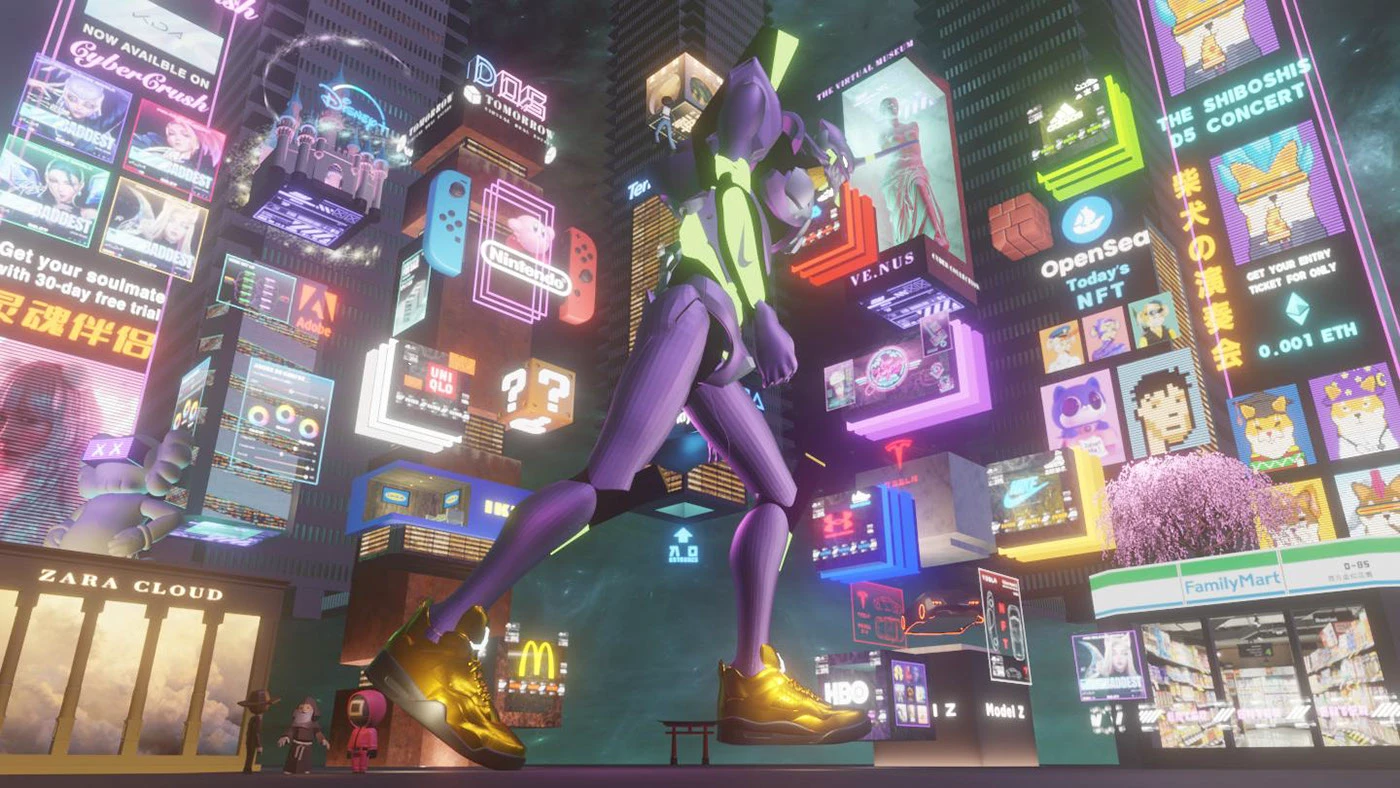
Let’s be honest. For decades, branding has been a largely two-dimensional affair. Logos on billboards, ads on screens, packaging on shelves. Sure, it works. But it’s, well, flat. Now, imagine your brand not as a static image, but as a living, breathing space you can step into. A place where your story unfolds around a customer, where they can touch, interact with, and even influence your brand’s essence.
That’s the promise—and the challenge—of the spatial web. We’re talking about immersive 3D environments, from virtual reality (VR) worlds and augmented reality (AR) overlays to persistent online universes. This isn’t just another marketing channel; it’s a fundamental shift in how we experience digital reality. And for brands, it’s a whole new playground with a completely different set of rules.
What Exactly is the Spatial Web? (And Why Should You Care?)
Think of it this way: if the current web is a library of separate pages you click through, the spatial web is the library itself. You’re inside it. It’s a convergence of physical and digital space, enabled by things like AR glasses, VR headsets, and increasingly powerful browsers. It’s less about visiting a website and more about inhabiting a web place.
For branding, this is monumental. It moves you from communication to creation. You’re not just telling a story; you’re providing the stage, the props, and the rules of engagement for an experience. The core question changes from “What do we say?” to “What do we let people do?”
The New Pillars of 3D Brand Experience
So, how do you build a brand in a world without edges? The old playbook needs some serious updates. Here are the new, non-negotiable pillars.
1. Presence Over Promotion
In a 3D space, a hard sell is like shouting in a serene art gallery—it just feels wrong. Branding here is about contextual presence. It’s about being a useful, interesting, or beautiful part of the environment. A furniture brand might not run a banner ad; instead, they could create a cozy, virtual showroom where users can resize sofas, change fabrics in real-time, and see how pieces look in a simulated version of their own home. The value is in the utility, not the interruption.
2. Embodied Interaction & Sensory Design
This is a big one. In immersive environments, people have digital bodies—avatars. They move, gesture, and perceive space. Your brand must engage with this embodied cognition. What does your brand feel like? The texture of a virtual product, the sound of a door opening into your brand space, the sense of scale when standing next to your iconic logo. These sensory details are your branding now. A luxury car brand, for instance, could focus on the precise sound of a virtual door closing or the haptic feedback of gripping the steering wheel.
3. Co-Creation and User Agency
The most powerful brands in the spatial web will be platforms, not just monuments. Users expect agency—the ability to change, customize, and build upon their surroundings. Can they personalize a product in your space? Can they build something new with your tools? Can their actions permanently alter the environment? This level of co-creation forges a much deeper, more emotional connection than any passive ad ever could.
Real-World Applications: It’s Already Happening
This isn’t all theoretical futurism. Brands are dipping their toes in, and the lessons are fascinating.
| Brand / Example | Environment Type | Branding Takeaway |
| Nike in NIKELAND (Roblox) | Persistent Virtual World | Brand as a playground. Lets users play sports games, dress avatars in digital Nike gear, and co-create mini-games. It’s brand-as-activity. |
| IKEA Place App | Mobile Augmented Reality (AR) | Solves a real problem. Lets users place true-to-scale 3D furniture in their actual homes. Branding is synonymous with utility and confidence in purchase. |
| Gucci Garden (Roblox) | Limited-Time Virtual Experience | Brand as exclusive, artistic event. Users could explore, view digital art, and even purchase limited-edition virtual Gucci items. It traded on scarcity and spectacle. |
See the pattern? It’s not about replicating an e-commerce site in 3D. It’s about finding a native, experiential reason to exist in that space.
The Inevitable Challenges (And How to Think About Them)
Of course, this new frontier is messy. Here are the big hurdles.
- Interoperability & The Walled Garden Problem: Can your virtual sneakers from one game be worn in another? Not yet. Brands must navigate separate platforms with different rules, audiences, and economies. It’s a fragmented landscape.
- Designing for “Liveness”: A 3D space is alive with other users. Your brand experience must be resilient to that—to people behaving unexpectedly, to crowds, to chaos. It needs to be dynamic.
- Metrics are Murky: Forget just click-through rates. How do you measure engagement in a 3D space? Time spent, depth of interaction, objects touched, user-generated content created, social shares from within the experience? New KPIs are needed.
- Authenticity is Everything: Users in these spaces have a powerful “cringe” radar. A brand that feels like a corporate tourist, dropping in with no understanding of the culture, will be ignored or mocked. You have to add value, not just extract attention.
Where Do We Go From Here? A Thought to Leave You With
The spatial web isn’t coming; it’s quietly assembling itself all around us, piece by piece. And honestly, the brands that will thrive aren’t necessarily the ones with the biggest budgets for hyper-realistic graphics right now. They’re the ones that start thinking in terms of world-building instead of campaign-building.
They’re the ones asking: What is our brand’s physics? What are its sounds, its rules, its emotional texture? What can a person do here that they can’t do anywhere else?
In the end, branding in immersive 3D environments is less about crafting a perfect image and more about planting a seed—a seed of an idea, a tool, an experience—and then giving your community the soil, the water, and the permission to help it grow into something you might not have even imagined. That’s the real shift. From broadcaster to gardener. And honestly, that’s a much more interesting place to be.